.png)


Manage AI Tokens Across Multiple LLM Providers: Top Tools to Measure Effectiveness of Tokens Used in 2026
- Ishani Dhar Chowdhury

- Jun 8
- 10 min read
What are the best tools to manage AI tokens across multiple LLM providers?
Ideally, the tools to manage AI tokens across multiple LLM providers fall into three categories. They are AI gateways, LLM observability, and evaluation layers.
The top LLM tools to manage AI tokens include the following:
Routing and Cost Control: LiteLLM, Bifrost, and Portkey. Leads AI gateways for token tracking, each supporting 100+ models with budget enforcement.
Token Spend and Tracing Prompts: Arize Phoenix, Datadog, and Langfuse. Offers open-source OpenTelemetry-native LLM observability.
Measuring Outcome Production from Tokens: Braintrust, Confident AI (DeepEval), and Maxim AI. Adds evaluation, quality, scoring, and drift detection.
Organisations now need a single line linking every workload and token to business outcomes. That's why you must choose the right token management software stack to combine all these layers.

Are AI tech leaders seeing the same hockey stick graph? Indeed, enterprise AI token usage has increased 13x since 2025.
However, most teams have zero visibility to manage AI tokens. You can indeed determine how much you're spending. Yet, you have no proof whether it's bringing value to your business.
According to Deloitte, 65% of organisations consider AI part of their corporate strategy. But only a handful recognise that not all returns are financial.
The solution? You'll need the top tools to manage AI tokens across multiple LLM providers. Without this, you cannot calculate ROI for AI spending.
Don't focus on token volume. Why? Well, tokens aren't outputs. They provide insight into 'how much was covered' and 'how much is left.'
In this blog post, we'll outline the architecture behind a holistic AI token management strategy.
Manage AI Tokens Across Multiple LLMs: A Business Priority

According to KPMG, enterprises will soon spend USD 124 million on AI annually. Many small businesses are also planning to increase AI budgets.
However, most don't have a structured way to track where this spending actually goes. You'll need to manage AI tokens across multiple LLM providers.
Token Consumption Rate

Did you know that AI token consumption has evolved much faster than financial planning? That's because AI operates through token consumption.
This is unlike legacy software operating on seat pricing. AI token consumption is:
Dynamic.
Nonlinear.
Invisible.
You'll need a proper infrastructure and AI strategy. With business growth, enterprise AI token consumption will also increase.
That's where an AI token management software comes in. Remember, a bad prompt chain might cost 10x more. Similarly, scaling applications will also lead to higher costs.
Real Cost? Untracked Tokens at Scale

According to Fortune, Uber burned through the company's entire 2026 AI budget in just four months. The problem? Their team didn't have an AI token tracking system in place.
Imagine if this happens in the healthcare industry. Let's assume a hospital uses up one trillion tokens in six months. That can lead to an unnoticed USD 6 million expense.
It's true, the cost per token has been dropping due to an increase in demand. Even then, the volume danger remains.
Counting ≠ Measuring Token Effectiveness
Did you know that AI adoption isn't the issue? Forbes reports that in 2022, the AI adoption rate reached 35%, proving a four-point increase.
So, what's the problem? Well, the issue is that there aren't enough tools to manage AI token usage.
Ideally, AI token management involves three separate issues:
Controlling routing and costs through the infrastructure layer.
Achieving visibility through the trace layer.
Evaluating output effectiveness.
The 3 Categories of AI Token Management Tools

According to IBM, CEOs report that only 25% of AI initiatives deliver expected ROI. Moreover, only 16% have scaled enterprise-wide.
There's a discrepancy: Measuring consumption vs measuring impact. Without the right tools to manage AI tokens, teams cobble together various partial solutions.
How do you construct an advanced AI stack? Here are the AI token management categories:
#1. AI Gateways: Control Routing, Cost, and Access

AI Gateways will operate between your application and LLM providers. They enforce budgets and unify access control by:
Routing models.
Performing semantic caching.
Controlling spend caps.
This occurs on the infrastructure level. That means, there won't be any change to the codebases.
#2. LLM Observability and Tracing: What's Happening at the Prompt Level?
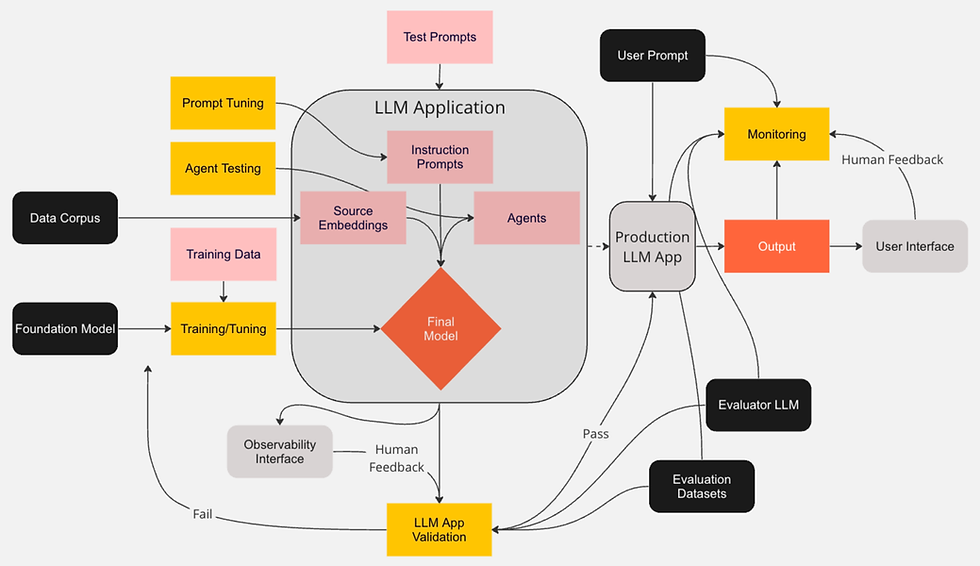
Ideally, tracking prompt-level visibility with a tracing software provides:
Insights at the level of spans.
Shows which prompts, completions, and calls failed.
Analyses which produced delays.
This type of AI token management tool will also give you an idea about what made a particular request costly.
#3. Evaluation and Monitoring: Token's Usefulness History
You'll need a platform to analyse output quality and ROI of all your previously used AI tokens. The right evaluation tool will:
Correlate output quality metrics.
Give you the amount of tokens spent on achieving results.
This category will offer a token's usefulness history from relevance to safety.
Best AI Gateways: Token Tracking Across LLM Providers
According to Yahoo Finance, enterprise LLM spending reached USD 8.4 billion. Anthropic took over OpenAI with this. Model API spending has also doubled due to this.
That's why you'll need to use the top AI token tracking platforms.
Portkey
Multi-provider routing with hierarchical budget controls.
A production-hardened option that offers:
Multi-provider routing.
Virtual API keys.
Hierarchical budget controls.
Reliability, cost, safety, and governance in one view.
Full control panel for production AI.
Portkey will allocate 'spend' by team, feature, and workflow. The platform open-sourced its AI gateway after processing 2 trillion tokens a day.
LiteLLM
Open-source unified API across 100+ models.
This is one of the top tools to manage AI tokens because it provides a unified API across models with:
Built-in spend tracking.
Pluggable callbacks to monitor tools like Langfuse or Helicone.
Budget enforcement.
This is a Python-heavy platform with full infrastructure control. Teams have to maintain the proxy server themselves.
Bifrost
Self-hostable enterprise AI gateway.
This is a product by Maxim AI. It targets enterprise teams that need:
Self-hosted deployment.
Semantic caching.
Four-tier spend hierarchies.
Bifrost delivers infrastructure-level cost tracking. It's a strong choice if you want an 11-microsecond overhead. Teams with non-negotiable data residency and governance should go for this.
Helicone
Open-source proxy with strong cost attribution.
It offers a simple open-source proxy with a:
Strong cost attribution.
Near-zero setup time.
Recently, Mintlify acquired Helicone, making its long-term roadmap uncertain.
OpenRouter
Single API for experimentation.
This AI token management platform works well for model experimentations. That can be through a single API, but it lacks self-hosting.
That's why it's better suited to prototyping than production of AI token management and cost governance.
Best LLM Observability Tools: Token Spend Visibility
Industry leaders have noted 74% of CFOs say that they're at the piloting and planning stage of AI. However, only 8% have deployed AI-assisted tools and agents.
Where does this gap come from? That's insufficient visibility at the prompt and completion level. Take a look at some of the best LLM observability tools:
Langfuse
OpenTelemetry-native, open-source, self-hostable.
This is a leading open-source LLM observability option that's:
OpenTelemetry-native.
Self-hostable.
Deeply integrated with LiteLLM, LangChain, and LiamaIndex.
Landfuse allows automatic token capture and also provides granular dashboards. Those are based on the model, user, and prompt version. Teams needing full data ownership can benefit from this tool.
LangSmith
Deep tracing for LangChain-heavy teams.
Offers the deepest tracing for teams already in the LangChain ecosystem. It comes with built-in:
Prompt versioning.
Evaluation pipelines.
Teams outside the LangChain ecosystem will find Langfuse or Arize more flexible.
Arize Phoenix
Open-source tracing with OpenTelemetry.
This is an open-source alternative for teams preferring a local-first analysis environment.
Ships with built-in evaluation templates.
Strongest for offline evaluation and debugging.
No high-volume production tracing.
Datadog and New Relic
LLM monitoring that's built into the existing APM.
This combination will create:
Correlation between token usage and latency.
Infrastructure data without fragmenting the monitoring stack.
It'll only work when LLM observability is a complement to existing APM.
Best AI Token Evaluation Tools: Measure Output Effectiveness
Only a handful of AI initiatives deliver expected ROI. Similarly, only a few have scaled enterprise-wide, and only a few executives say they can measure it confidently.
Evaluation tools can help close this gap.
Braintrust
Traces, evals, and experimentation in CI/CD.
A strong all-rounder choice for teams who want:
Traces.
Evaluations.
Experimentations.
Braintrust integrates into CI/CD pipelines. As a result, it provides:
Per-request cost breakdown sliced by user, feature, or model.
Teams test cheaper prompts against real product traces with scored outputs.
Maxim AI
Specialised scorers and multi-provider cost monitoring.
Pairs naturally with its Bifrost gateway. As a result, Maxim AI offers:
Specialised scoring.
Multi-provider cost monitoring.
A combination of infrastructure-level enforcement.
Application-level quality scoring.
Cost and effectiveness in a single stack.
Confident AI (DeepEval)
Quality scoring and safety.
This platform focuses on safety evaluation and drift detection. That'll be across 50+ research-backed metrics. It covers:
Faithfulness.
Hallucination.
Relevance.
Toxicity.
This AI token management platform is valuable for marketing and content teams. Using Claude or similar models in a multi-channel output workflow? Confident AI can help where output quality directly affects business results.
How to Choose the Top Tools to Manage AI Tokens? Get the Right Stack for Your Team Size and Use Case
Gartner foresees that 40% of enterprise apps will use task-based AI agents by year-end 2026. This represents a massive shift compared to less than 5% observed last year.
Autonomous processes induce repetitive sequences and multi-request cycles. That's why opting for an appropriate management tool is important.
Small Teams Using Claude API with n8n and Multi-Channel Outputs
This 'lean' approach involves the following to manage AI tokens:
Profile: Minimalist engineering structure. Leverages no-code/low-code processes for multimodal tasks.
Stack Blueprint: An AI gateway combined with an out-of-the-box observability product.
Execution: Direct request routing through cloud-based LiteLLM or Portkey. Instantaneous setup of virtual API keys with spend caps on a per-user basis.
What can these integrations do? They can be seamlessly connected to Langfuse Cloud via a middleware.
Example: Portkey handles routing, virtual key management, and budget enforcement. Braintrust with custom scorers closes the loop on whether completions are producing the marketing outcomes.
Mid-Sized Engineering Teams with DevOps Capability

This helps with infrastructure management and performance:
Profile: In-house DevOps or Backend teams. Scaling custom product capabilities and processing LLM traces per day.
Stack Architecture: Fully self-hosted and open source proxy system. This is alongside a massive columnar trace analysis execution plan.
Execution: Set up a containerised instance of the LiteLLM proxy. It's for guaranteed fallbacks, caching, and multiple provider failover capability.
You can also route all telemetry data to a self-hosted Arize Phoenix or Langfuse platform. This will be running on top of a ClickHouse storage backend.
Enterprise Teams with Compliance and Governance Needs
To meet cryptographic audit and compliance needs, follow this:
Profile: Industries operating in a regulated environment. Financial Services, Healthcare, and Law. Uses AI across multiple departments with an emphasis on security overhead.
Stack Blueprint: Enterprise gateways with tiered architecture, deterministic evaluation engines, and guardrails with enforcement.
Execution: Use Bifrost by Maxim AI or an enterprise-level Portkey implementation for four-tier budget hierarchies. These align with the internal corporate structure to manage AI tokens.
Also, locally deploy Confident AI (DeepEval) to methodically test hallucination, toxicity levels, and test safety. This approach guarantees compliance with auditing provisions.
Beyond Tokens: Key Metrics to Track

Managed AI tokens will only be an input metric. They'll tell you what was consumed. However, it won't divulge what the AI workflow delivered.
You must treat AI like any other resource. It should have clear unit economics and structured governance. You must have a relentless focus on converting spend into outcomes.
Token Effectiveness Ratio (TER)
Reports suggest that the AI token economics shift meaningfully at scale. For instance, as token volumes grow, deployment models will either become more or less cost-effective.
TER measures the effectiveness of any AI token against the total used.
High Ratio? This will mean your prompts are tight and outputs are usable.
Low Ratio? This flags bloated context and redundant instructions.
Cost Per Outcome (CPO) vs Cost Per Completion (CPC)
Cost per completion = What an AI task costs.
Cost per outcome = What it was worth.
Ideally, CPC is a converted lead, a resolved ticket, or a completed AI task. Evaluation tools like Braintrust make CPO possible by attaching quality scores to each completion.
Want to manage AI effectiveness? This CPO vs CPC measurement separates the best LLM cost tracking tools from the worst.
Output Quality Scores, Safety Signals, and Drift Detection

Tools like DeepEval and Brantrust scores:
Faithfulness.
Relevance.
Safety.
This will be on every production request. Drift detection flags degradation across model updates or prompt versions before it surfaces.
What happens when you use them together? These metrics will shift the conversation from 'how much did we spend' to 'what did we get for it.'
The Endnotes
Ready to select the top tools to manage AI tokens? This management software will ensure responsible scale becomes the fundamental aspect.
It doesn't matter where you begin. Example: Use an infrastructure gateway such as Portkey (BuildMVPFast) or LiteLLM. Then, implement Langfuse or LangSmith for comprehensive prompt tracing. Adopt Braintrust for quality analysis.
The bottom line is that you should shift from tracking inputs to assessing what they generate. Do you want to lead the next phase of AI transformation? Then, approach tokens just like any other precious asset.
When you manage AI tokens, you're creating solid unit economics and governance. It'll help convert abstract computer expenses into concrete business impact.
The global enterprise LLM market will reach USD 48.25 billion in the next eight years. Between 2025 and 2034, it'll exhibit a 30% CAGR.
That's why building a strong operational practice will provide significant benefits for the future. Don't wonder about the value. Start installing the right layer of visibility to transform your business growth.
FAQs
Can you leverage several token management services at once?
Yes, it's common practice to combine top tools to manage AI tokens. You can use an AI gateway functionality that routes requests and enforces a budget, such as LiteLLM. Combine that with a tool to track tokens used for LLM observability, such as Langfuse.
Should small companies consider self-hosted AI gateways?
Self-hosting solutions (LiteLLM or Bifrost) provide better cost efficiency and token control for the long run. However, it involves significant DevOps effort. Small teams should go for managed versions (Portkey or Langfuse Cloud) to shorten setup time, effort, and cost.
What is the AI token evaluation tool vs cost tracking tool debate?
Ideally, a cost tracking tool that tells you how many tokens were consumed and what they cost. An AI token evaluation tool tells you whether those tokens produce a useful output or not. Ultimately, the former tells you how many tokens are left, and the latter proves if it was worth spending.